
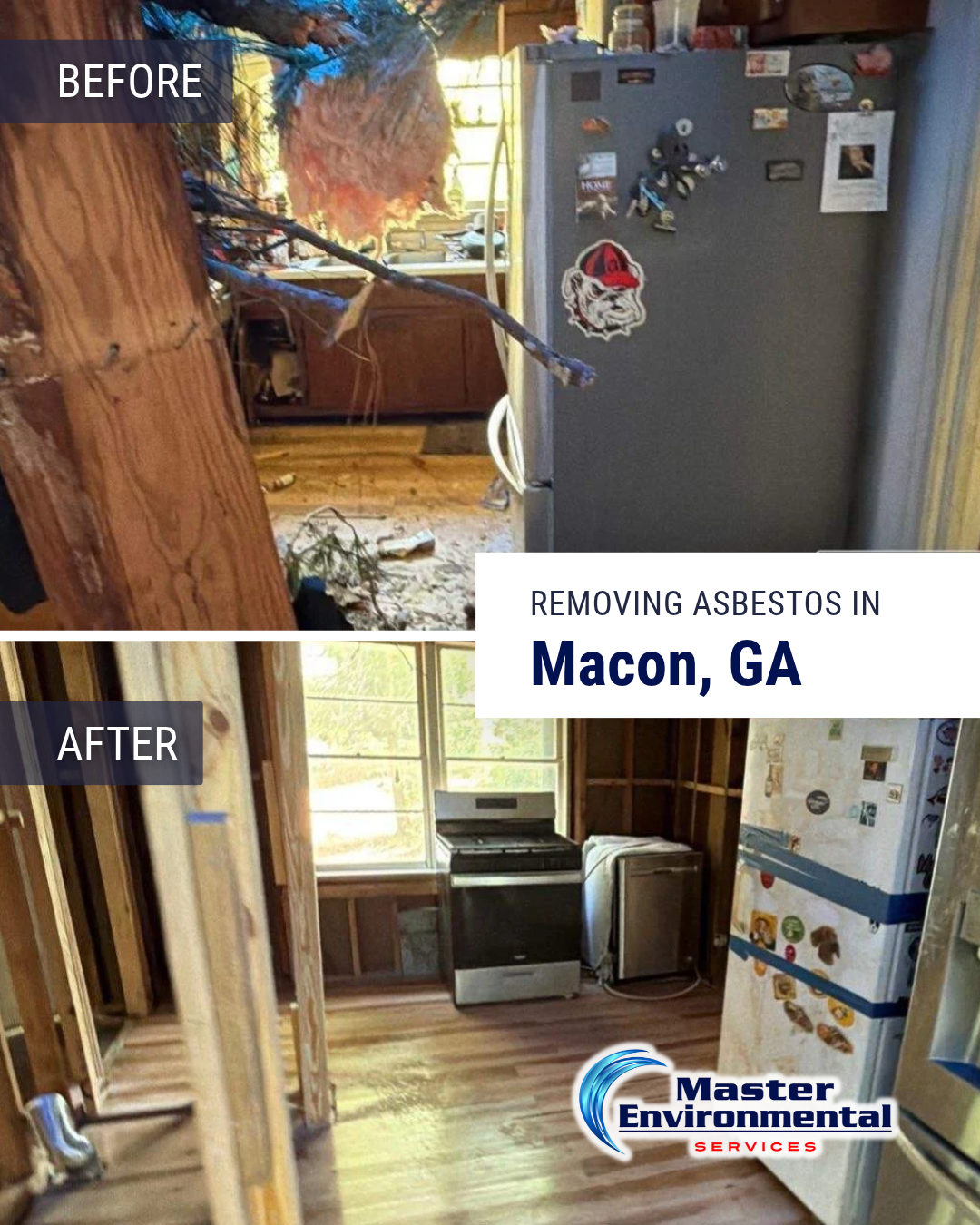
When a tree came down on a Macon, Georgia home, it didn’t stop at the roof. It crashed straight through the kitchen ceiling, leaving branches, insulation, and broken drywall scattered across the room. The homeowner was ready to start rebuilding, but one question had to be answered first: what was in all that broken wall and ceiling material?
When Storm Damage Disturbs Old Materials
Most people think of asbestos as a renovation problem, something you run into when you decide to open up a wall. But storm damage can disturb it just as easily, and without any warning.
Drywall joint compound was a common source of asbestos in homes for decades. As late as 1977, roughly half of the patching compounds sold in the U.S. contained it. These materials are generally stable when left alone.
Once a falling tree cracks, crushes, and scatters them, though, fibers can be released into the air and settle into the debris throughout the room. That means storm cleanup isn’t always as simple as hauling out the mess. The U.S. Environmental Protection Agency recommends having suspect materials tested before they’re disturbed further (see the EPA link on our Resources page). If damaged materials contain asbestos, sweeping, shoveling, or tearing out drywall can spread fibers through the rest of the home and cause a major safety hazard.
Calling In The Experts
Before reconstruction could begin, Master Environmental Services was brought in to assess the damaged kitchen. Our team collected samples of the broken drywall and joint compound and sent them out for lab testing.
The results came back positive for asbestos. That answer changed how the cleanup needed to happen. Instead of a standard demolition and debris haul, the kitchen needed to be handled with regulated abatement procedures from start to finish.
The Plan
For this Macon home, the work came down to three straightforward steps.
- Contain the area. We sealed off the damaged kitchen from the rest of the house and set up the required containment so fibers couldn’t travel beyond the work zone.
- Clear the debris. We removed the branches, fallen insulation, and broken drywall that had come down with the tree, handling all of it as asbestos-containing material.
- Remove the remaining drywall and ceilings. We took out the additional drywall and ceiling material, leaving the room open to the studs so the reconstruction company could repair the home in a clean, confirmed-safe space.
The before-and-after photos tell the story: a kitchen buried in branches and debris became a clean, open room ready to rebuild.
What We Avoided
After a tree comes through the roof, the instinct is to clean up fast and get the repairs moving. But clearing asbestos-containing debris without testing could have spread fibers through the rest of the house, exposing the family and the crew hired to rebuild it. By testing first and handling the material properly, this homeowner protected everyone in the home and kept the reconstruction on track without costly setbacks later.
Storm Damage in Your Georgia Home?
Every damaged home is different, and the right response depends on the age of the house, the materials involved, and what testing actually finds. The goal is always the same: know what you’re dealing with before you disturb it.
If a storm or fallen tree has damaged your home or you just have some repairs that need to be done, don’t assume the broken drywall and ceiling material is safe to clear out on your own.
Contact Master Environmental Services to discuss your property and determine the right next steps.